Courses, not tokens
The most common AI strategy in Latin America, and why it doesn't work.
Six months ago I wrote about what we had learned about AI and how we ended up starting the consultancy. This time I wanted to write about what we have learned specifically about AI adoption.
I was going to write it for myself anyway, but the access we have had to certain people is not that common, and I am sure someone else will find it useful.
I understood the summary of all of this last week.
For months I have been begging chasing Anthropic and OpenAI, with whom we have done events in San Francisco, to do something together in Latin America.
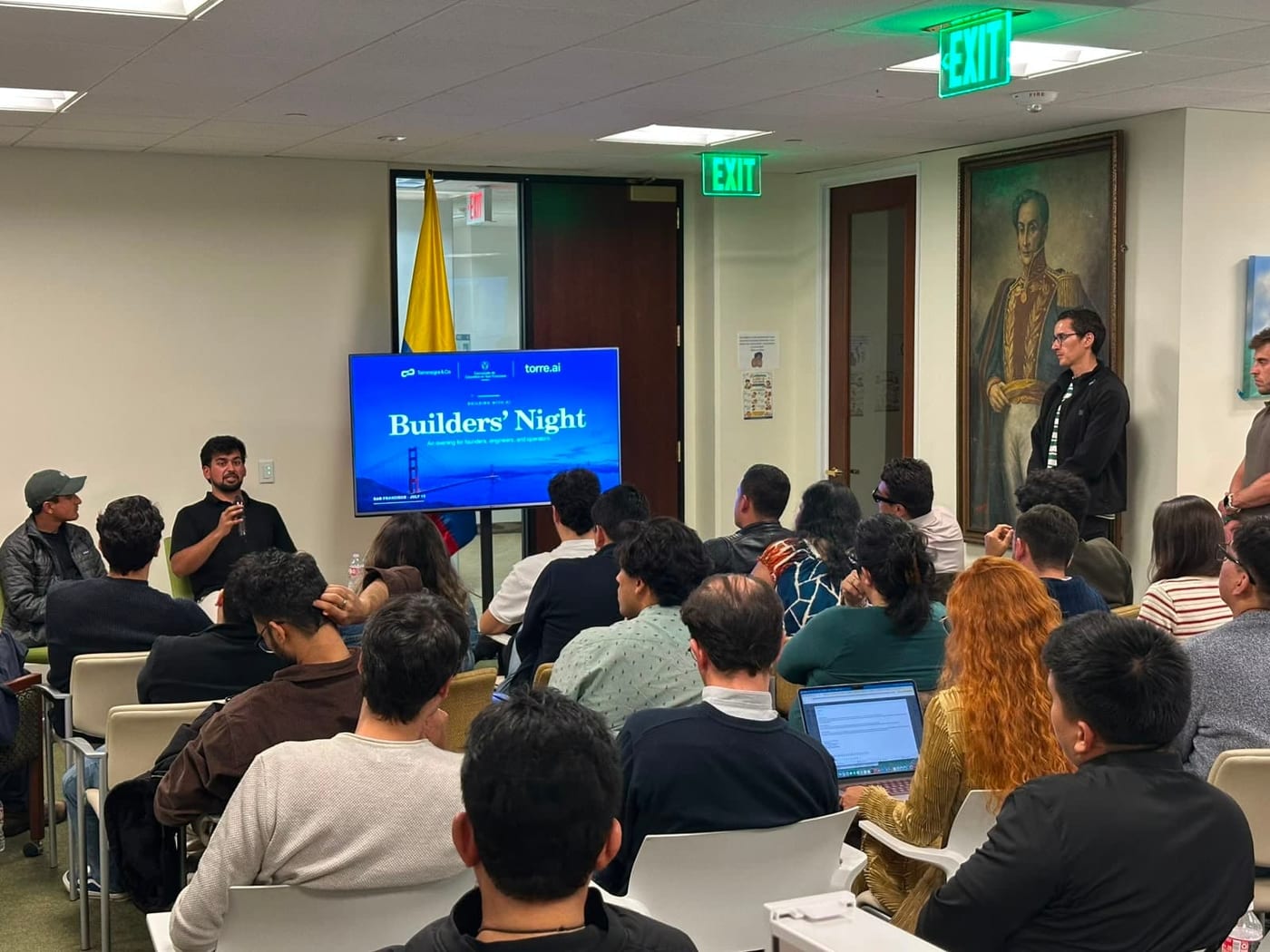
But no matter how many different people I contacted, every time I told them the event would be in Mexico or Colombia, they stopped replying.
Until, finally, someone on the Anthropic team told me directly. Part of it in this email:
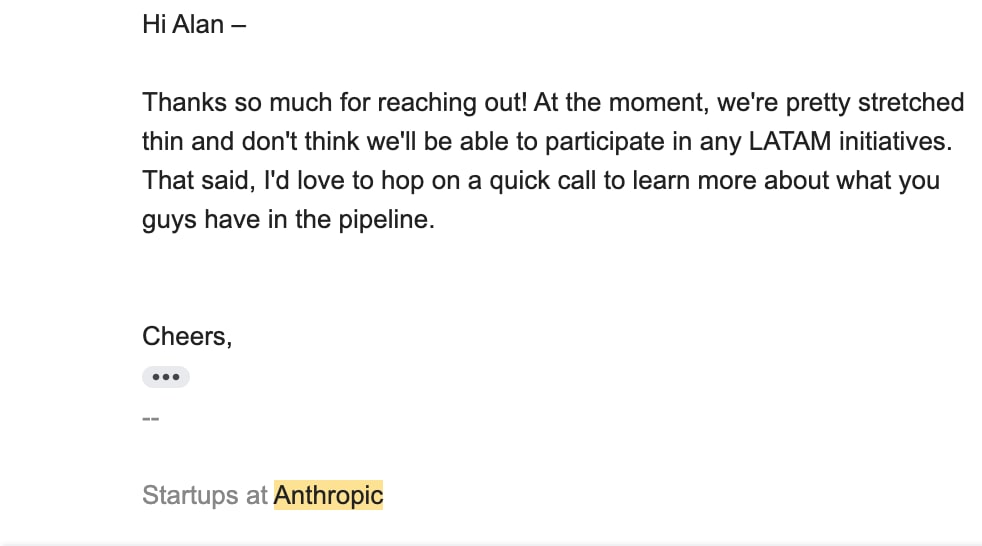
And the rest in the call we had afterwards, where they made it clear why, for Anthropic, officially opening the market in our region did not make sense:
- Bureaucracy and the tax burden are much heavier than in more lucrative markets (US and EMEA). I did not know this.
- Token consumption in the region is not that relevant.
In fact, in the S-1 it published this week, Anthropic reported $16.3 billion in revenue for the first half of 2026.
Latin America is probably not even 5% of that.
And I did not only talk to Anthropic and OpenAI. I also talked to people at SpaceX, Palantir, Google DeepMind, Cognition, Perplexity, Replit, Runway, and others. More than talking, I literally begged them to come to Latin America (in November 2025 I wanted to work at this kind of company, and I offered them every kind of contact). Nothing.
I think that story ends up reflecting something bigger: what we have seen from the consultancy.
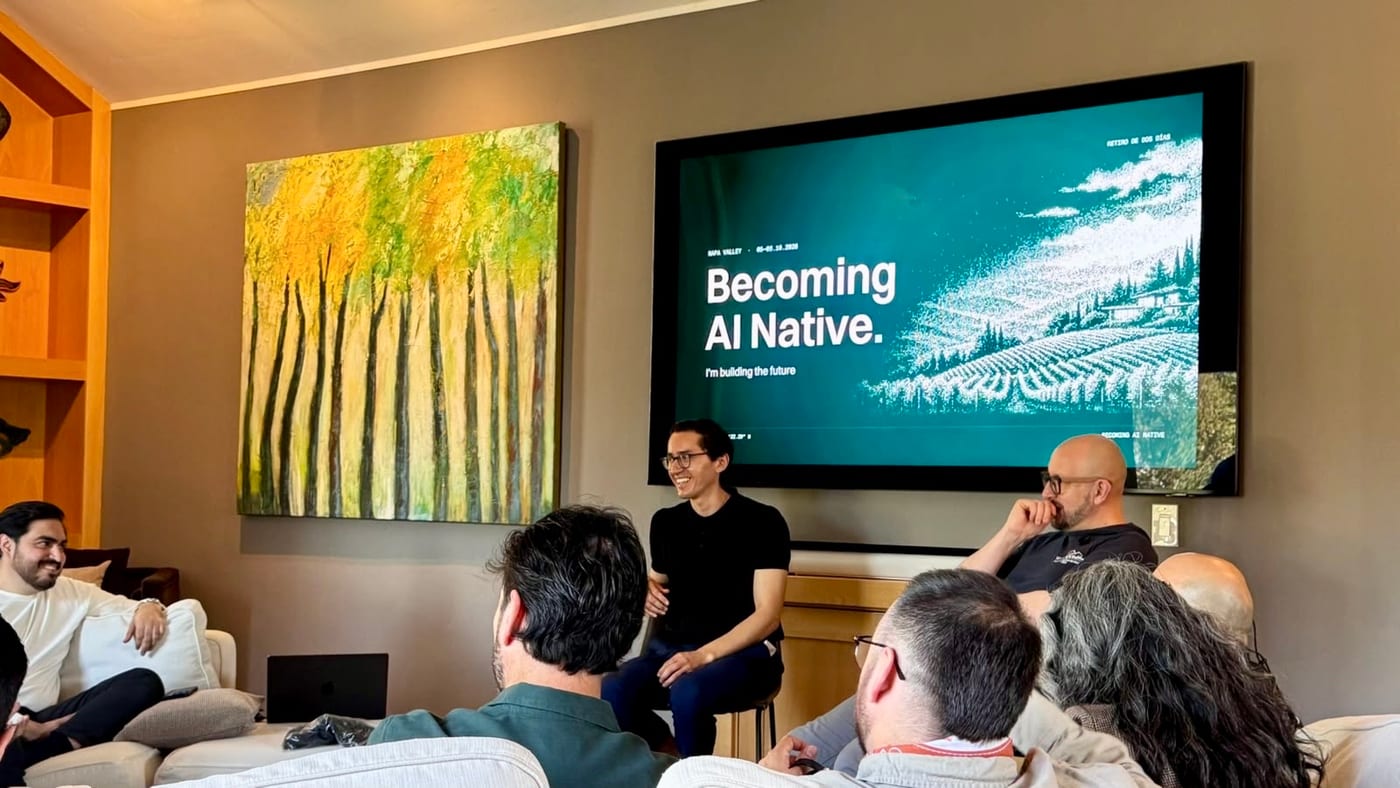
Almost seven months ago we started from three conditions that made this market attractive:
- The unfair advantage of our audiences on social media and the databases from our previous companies.
- Our technical know-how.
- Our relationships with engineering talent in Latin America and San Francisco.
Hypothesis to validate: Can we arbitrage these resources to build an AI consultancy focused on implementing agents?
The answer so far: Yes… but not on the implementation side.
Since 2024, what the market keeps demanding is, for the most part, education:
- Either you pay for courses yourself to upskill.
- Or your company pays for them as part of its AI strategy.
We believed that by 2026 the market would slowly get over its course-itis (which is natural). So far it has not moved much.
Personally, I did not want to get into the education business. You do it out of love, out of masochism, or both, because it is rarely lucrative: if it is a subscription, retention is usually terrible, and if it is one-off, LTV is zero.
But I was not closed to it. Maybe it could work as an acquisition channel: we are both constantly invited to give talks, and leads for the implementation side could come from there.
However, what started as a go-to-market strategy ended up becoming the business itself.
And this is not a complaint. We are taking advantage of it: today there are corporations that have paid us up to $30,000 for talks and workshops, so it would be hypocritical of me to complain.
Also because some companies have surprised me with their AI adoption. Farmatodo, to name one. And on the other hand, how fast Fedesoft companies have moved in their adoption, so this is by far a generalization.
But what keeps our region stuck on education? Even more, for many companies the AI strategy seems to be sending their teams to courses and hoping that they will somehow transform the company. I think these are the reasons:
1. We care more about regulating AI than about growing with it
This is one of those things I could easily keep private, but a few weeks ago, at the event we organized in San Francisco with different people from government, it felt unreal that the "most wonderful" idea some government attendees came up with, and part of their questions, was:
"How to better regulate the use of AI."
What drives me crazy is that something similar happens inside companies: what most people think about is how to "regulate" their employees' use of AI, because who knows, they might share sensitive information.
Sure… I understand why it can be a concern, but it feels almost exaggerated to me.
While here many people worry that their information will be stolen (which is a bit of a paradox, because they do not even use it: it sits in an ERP, or it is not even stored well), elsewhere companies are asking how to grow more with these technologies.
2. Solving problems by throwing people at them
With a salary of $250 to $600 a month you can live in several Latin American cities. And when human capital is that cheap, it is often better not to put critical thinking into a problem, and to put people on it instead.
It is a good patch, because a person, unlike an AI agent today, uses their judgment even with few instructions, talks to people, and figures out what to do to finish a task.
So if someone tells you an AI agent can do the same job, but it has a variable cost in tokens and you will have to map your operation and your data well, it sounds like so much work that you would rather ask:
Why change what already works?
3. More than a company, we are a family… a dysfunctional one
Obviously, nobody likes firing people. I have only done it three times in my life, and I was extremely nervous and wanted to postpone the conversation.
But sometimes this goes hand in hand with the previous point: if you solved a problem with people and you want to be very "innovative," you will have to let go of some of those whose work could be replaced. For many, ignoring it is better than doing something.
There is also a strange part: for some reason (and I have this bias too), we assume that a company with many employees must be doing well, and that if it lays people off, something bad is happening.
On the other hand, and here comes the dysfunctional part… if there is one thing I keep hearing when I interview teams, it is that they feel their opinions are not respected. Even when they want to propose an innovation or an improvement, it does not seem to resonate with the leadership team, which asks for "innovative" ideas but, when they are proposed (if they take the time to listen to their team at all), does not take them into account.
In the end, I think both things reflect bad leadership, which I explain in the last point.
4. Your company's culture is a reflection of you
"We need our team to be more proactive, to propose more."
"We need our team to use these tools more effectively."
"We need more of a startup mindset."
My opinion here is specifically about technology companies. It comes from my own startup, from having worked at corporations and startups, and from having evaluated at least 4,000 companies since 2023 and worked, one way or another, with at least 200.
I would sum it up in a sentence that stuck with me in 2022:
"If your company is doing well, it is because you have a good team. If not, you, the founder, are the problem."
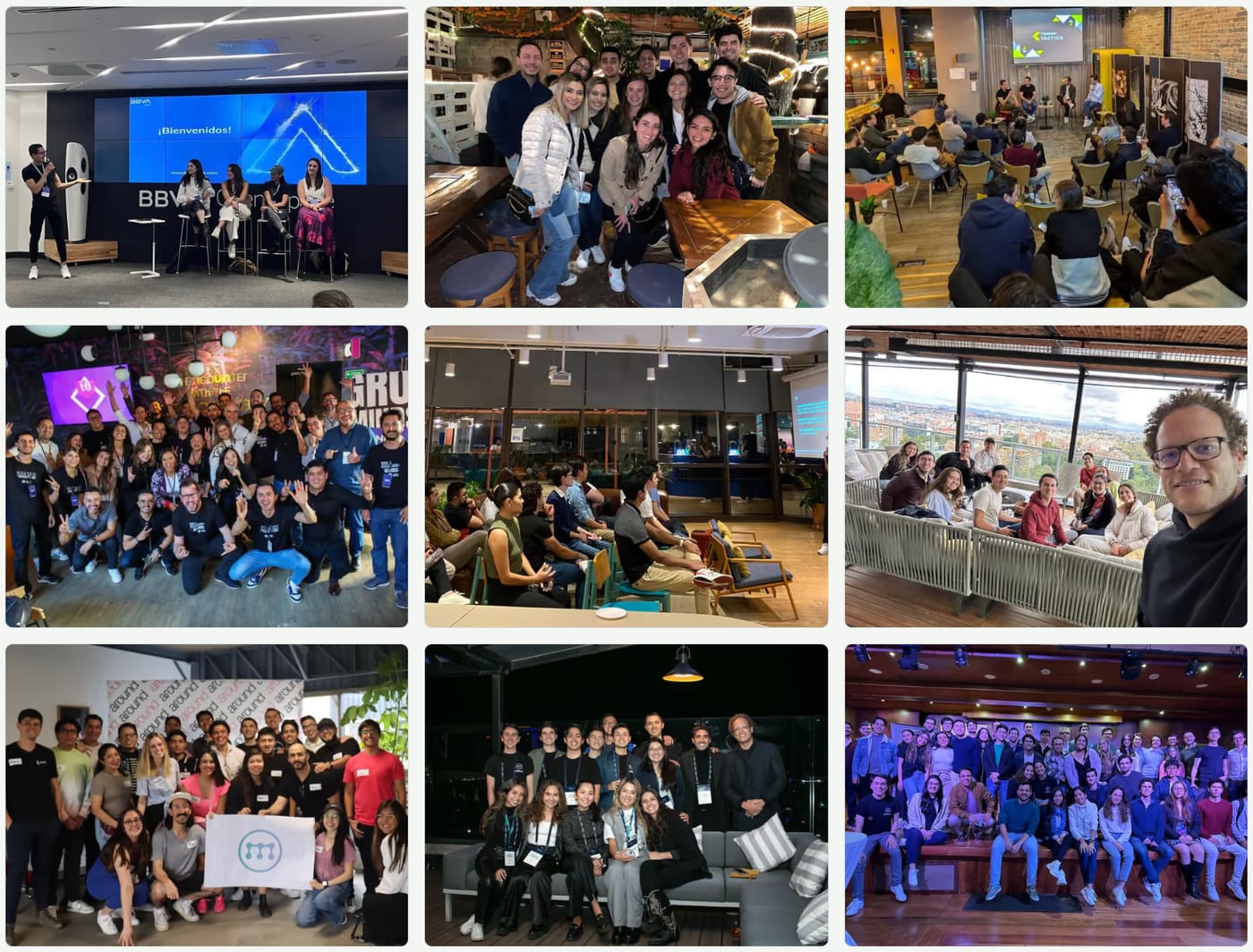
I have given at least 10 talks attended by people from Grupo Salinas, Banco de México, KPMG, Engie, and companies like these. The curious part is that I never saw a VP or C-level executive from those companies there.
I do not think that is a coincidence. Knowing how to attract and hire the best talent, the "innovative" and very proactive kind, is the most important thing. But to attract that talent, you, the business owner, manager, or leader, have to be that same talent.
So do not send your team to courses or workshops hoping they will transform the company. You yourself should become obsessed with AI and develop a deep understanding of it.
And that, ultimately, is the root cause, if we did the five whys exercise:
- Why are companies not adopting AI? Because their processes and data are not well organized.
- Why are they not well organized? Because the effort was never made.
- Why was the effort never made? Because until now everything worked fine with people, and nobody wanted to change.
- Why did nobody want to change? Because whoever leads did not see it as their problem, and sent their team to a course.
As long as AI is the team's homework and not the leader's obsession, Latin America will keep consuming courses, not tokens.
Once again, it is hypocritical of me to write this, because we ourselves are taking advantage of this market. But I hope that curve speeds up and we get over course-itis faster.
This is only one part and a summary of this journey. If you have ideas that complement or challenge what I share here, I would love to read them. You can send me a private message.