China just changed the rules of artificial intelligence
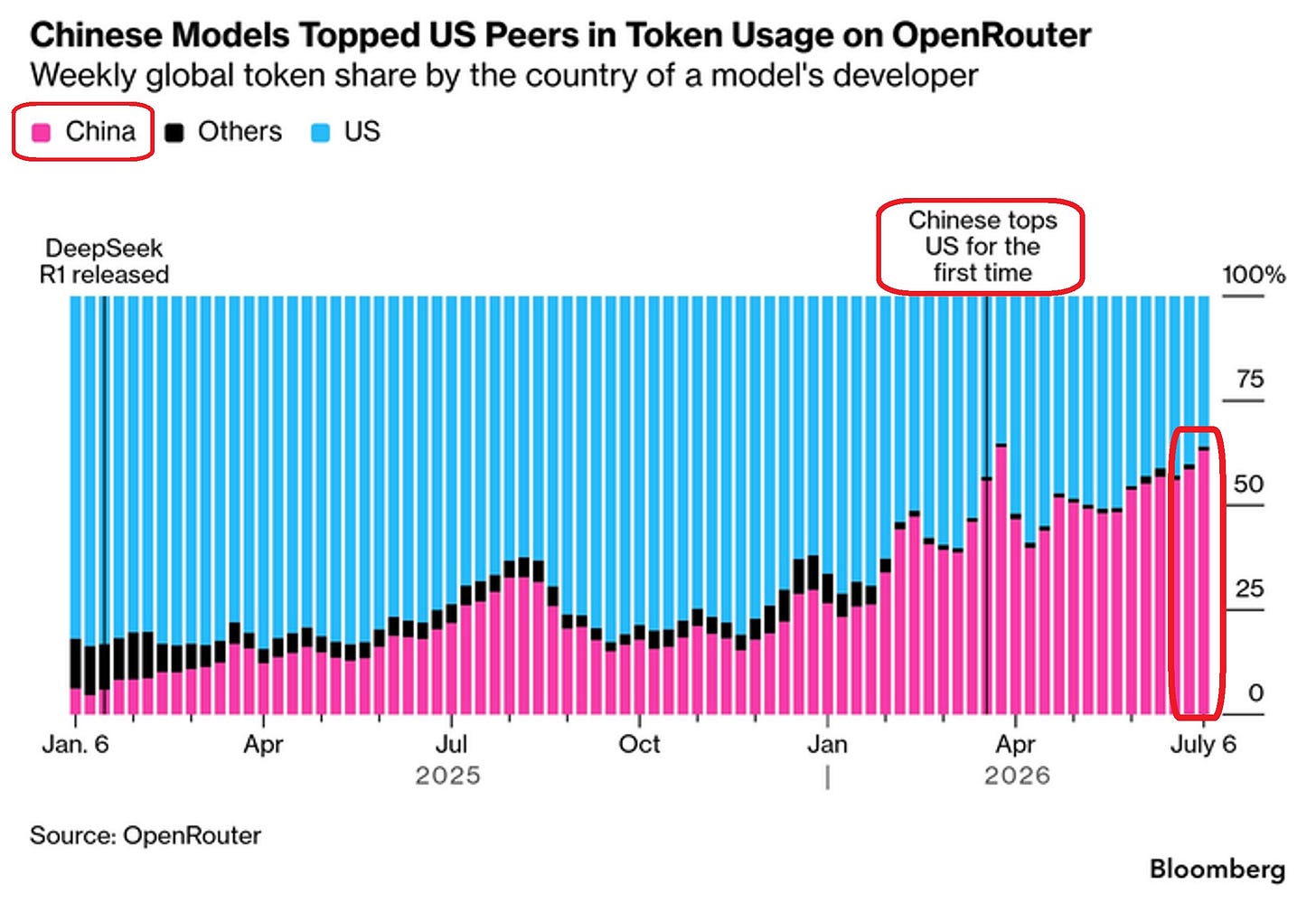
Kimi K3 shows that the most advanced models may stop belonging to a handful of companies. That changes what a company should consider its real intellectual property.
Kimi K3 made noise in Silicon Valley for a combination that is hard to ignore:
- The new model from the Chinese company Moonshot AI came close to the performance of the most advanced models from OpenAI and Anthropic.
- It ranked first in frontend development evaluations, and
- It announced it will publish its weights on July 27.
Big news: Kimi-K3 by @Kimi_Moonshot is now #1 in the Frontend Code Arena with 1679 pts, surpassing Claude Fable 5.
This is a 17-place jump from Kimi-k2.6 (#18 -> #1).
In Frontend, Kimi-K3 ranked #1 in 6 of 7 domains: Brand & Marketing, Reference-Based Design, Data & Analytics,
Initial demand was so high that Moonshot had to temporarily pause new subscriptions while it added capacity.
This does not mean China won the race. But a capability that until recently seemed exclusive to a handful of American companies could become, in a matter of days, a model that companies, governments, and providers can download, adapt, and run.
In short, Kimi shows that frontier intelligence depreciates faster and faster. And that changes what a company should consider its real intellectual property.
The paradox AI turned around

Decades ago, Kenneth Arrow described a paradox in the market for information: to know whether an idea is worth paying for, the buyer needs to know it; but once they know it, they have already received part of its value.
Something similar happens with artificial intelligence, but in reverse.
For a general model like Fable 5 or GPT-5.6 to be genuinely useful, the company has to teach it how it operates. It has to share its documents, its tools, the way it makes decisions. In other words, all of its information.
But the most valuable knowledge is not necessarily in what the company hands over at the start. It is in what gets generated afterwards: when someone explains why an answer was wrong, when a recommendation does not apply, or what result would be good enough to use in production.
Each of those corrections contains institutional knowledge about the company and its industry. It is something that probably never appeared in a manual, but that a person with years inside the company recognizes immediately.
In other words: by consuming intelligence, the company is also producing intelligence.
The question is who keeps it.
Privacy is not portability
The main providers, OpenAI and Anthropic, Amazon and Microsoft, offer solid controls and commitments not to use their customers' data to train their models without authorization. That solves an important part of the problem, but not all of it.
A company can legally keep ownership of its data and outputs and still leave its ability to learn trapped.
A thought experiment shows it:
If OpenAI or Anthropic disappeared tomorrow, would your company keep what it learned, or would it have to start over from scratch?
The answer is that it would start from scratch. This is one of the reasons open models have been gaining popularity.
Rent intelligence, keep the learning
The most likely architecture will be neither fully open nor fully closed.
Closed models will remain valuable for solving new, ambiguous, and hard problems, where a few extra points of capability justify the price.
But the company should keep, inside its own infrastructure, the evaluations, corrections, execution logs, rules, and examples that define how the work is done well.
As a process repeats and its criteria become clearer, part of that work can move to an open model adapted to the organization, while the exceptional cases keep using the frontier model.
The company rents the best intelligence available, but keeps what it learns with it.
Careful: this only works when the business layer is separate from the provider. That is why it is so important that you own the harness and can swap the brain (the AI model).
This is one of the most critical points every government and corporation should keep in mind.
Now, the reality of Latin America has a good side and a bad side. The good: we are looking at an almost unexplored field. The bad: that is because AI adoption is still very stagnant.
But this also means that the companies, governments, and other organizations that start implementing AI now, something they should already be doing, can take advantage of all the knowledge available and gain an edge.
We ran a study on the level of AI adoption in Latin America, looking in more detail at the current state, the main challenges, and the steps organizations can take to move forward.
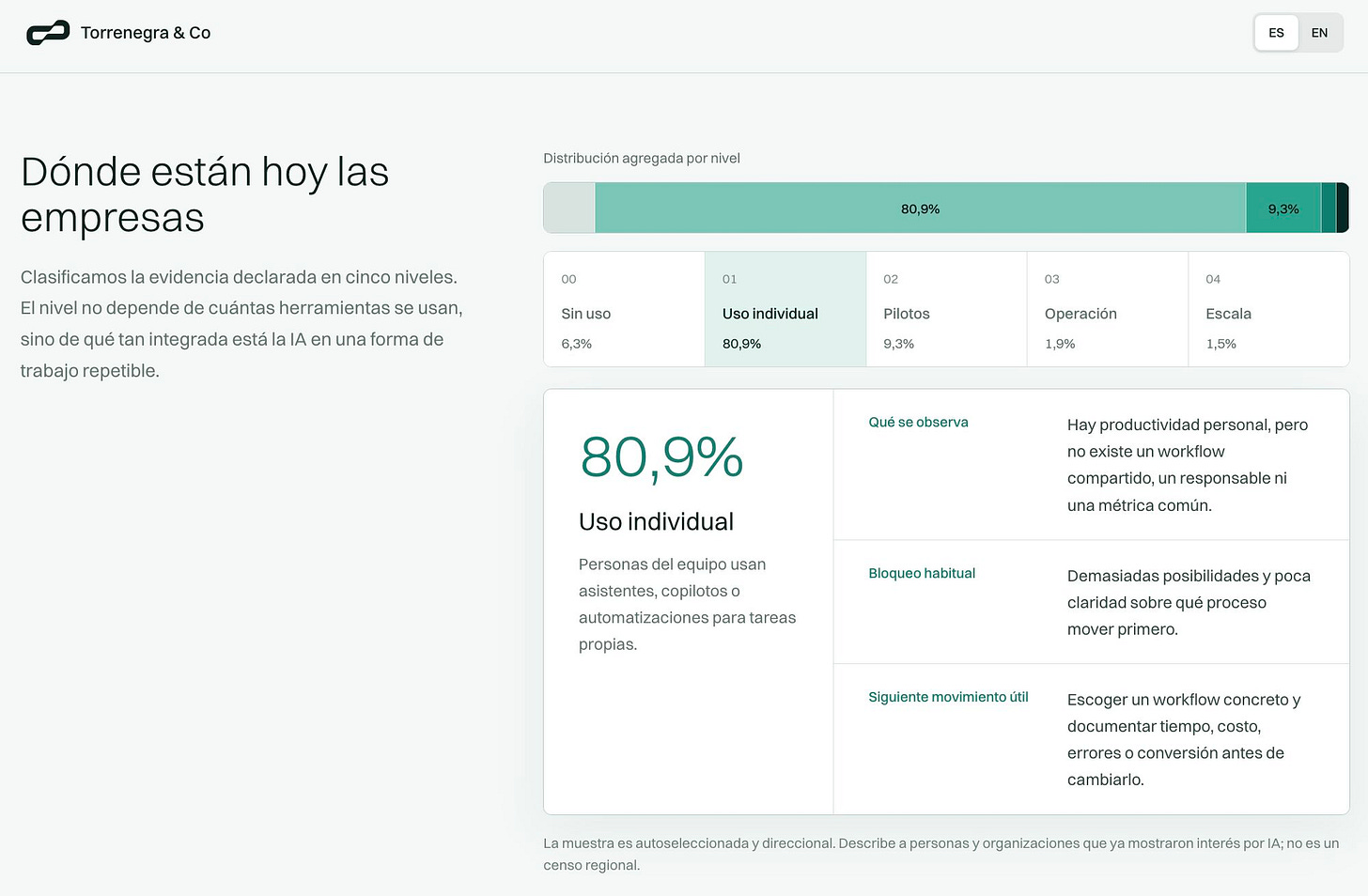
If anything is certain in this environment, it is change. But the goal of this article is not to confuse more people or discourage them from adopting AI. Indecision and analysis paralysis are also decisions, and probably the worst ones.
It is better to make mistakes, experiment, and learn than to limit yourself to reading articles or watching videos. And yes, I recognize the irony of saying that at the end of an article.
The best thing you can do now is try tools like Kimi, GPT-5.6, and other alternatives yourself, and start forming your own judgment.