Always-on agents: what they are and how to start
Grok Bot, Dots, Claude Duet, and the new category of agents that work in the background. Why your company's context is what matters most.
I live in Silicon Valley and I am in touch with Latin America all the time, and the distance between the two worlds is sometimes strange. Here, companies already treat their AI agents like one more employee. There, many are still copying and pasting code into ChatGPT.
In the last few months that distance grew, because a new category appeared: always-on agents. In barely ten weeks we got Grok Bot, Instinct, Muse, Dots, and Claude Duet.
We’re opening a research preview of Claude Duet, a new app where Claude works as a proactive agent.
It comes to you with what needs your attention, completes tasks you ask of it, keeps working when you step away, and checks with you before it acts on your behalf.
From copilots to autopilots
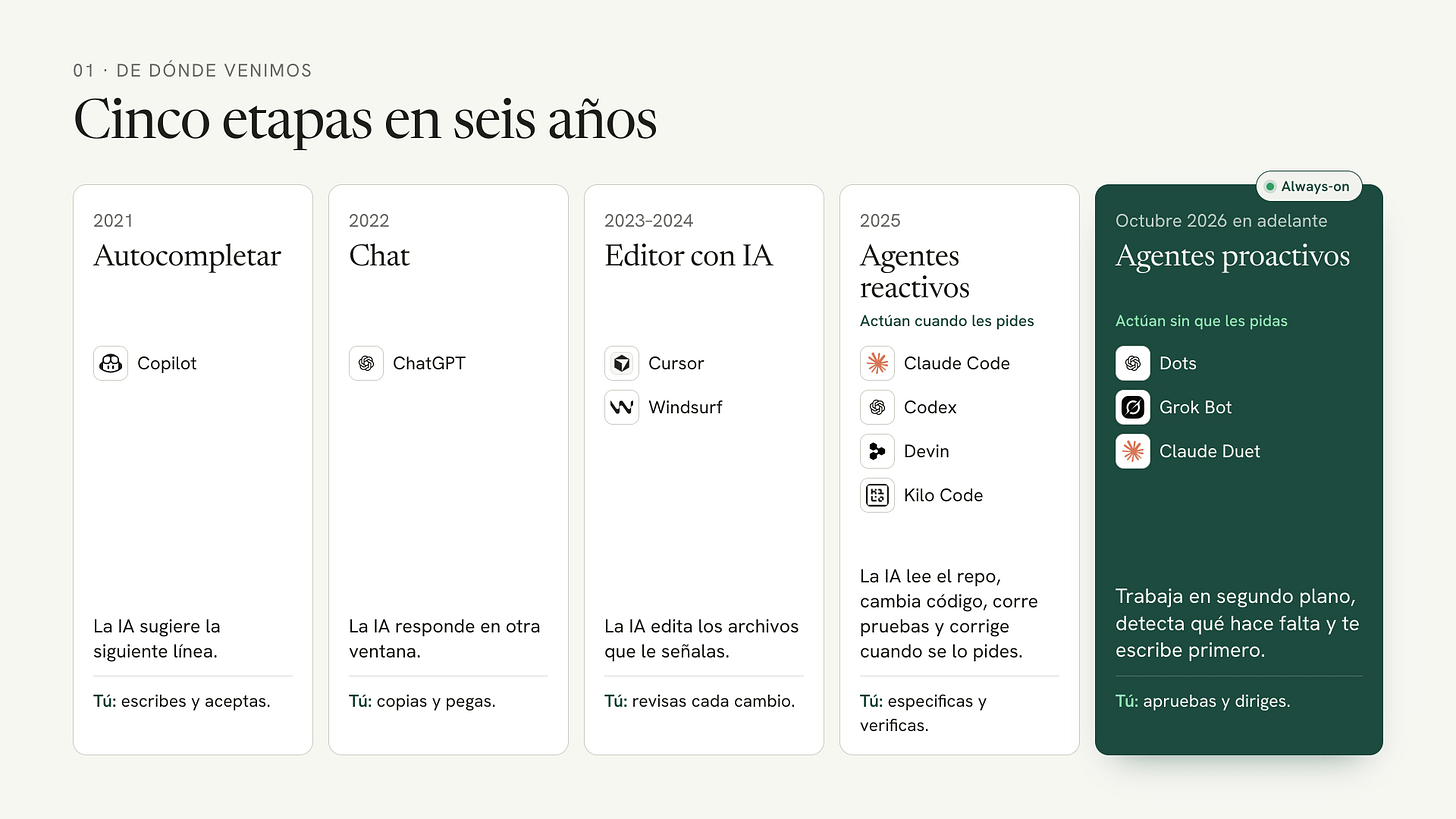
Look at the last line of each stage: the story is not so much what the AI does, but what you do. You went from writing to copying, from copying to reviewing, from reviewing to specifying, and now to directing.
The biggest jump is the last one:
- Until 2025, agents were reactive: they did a lot, but only when you asked.
- Proactive agents detect what is needed and come looking for you.
What an agent is
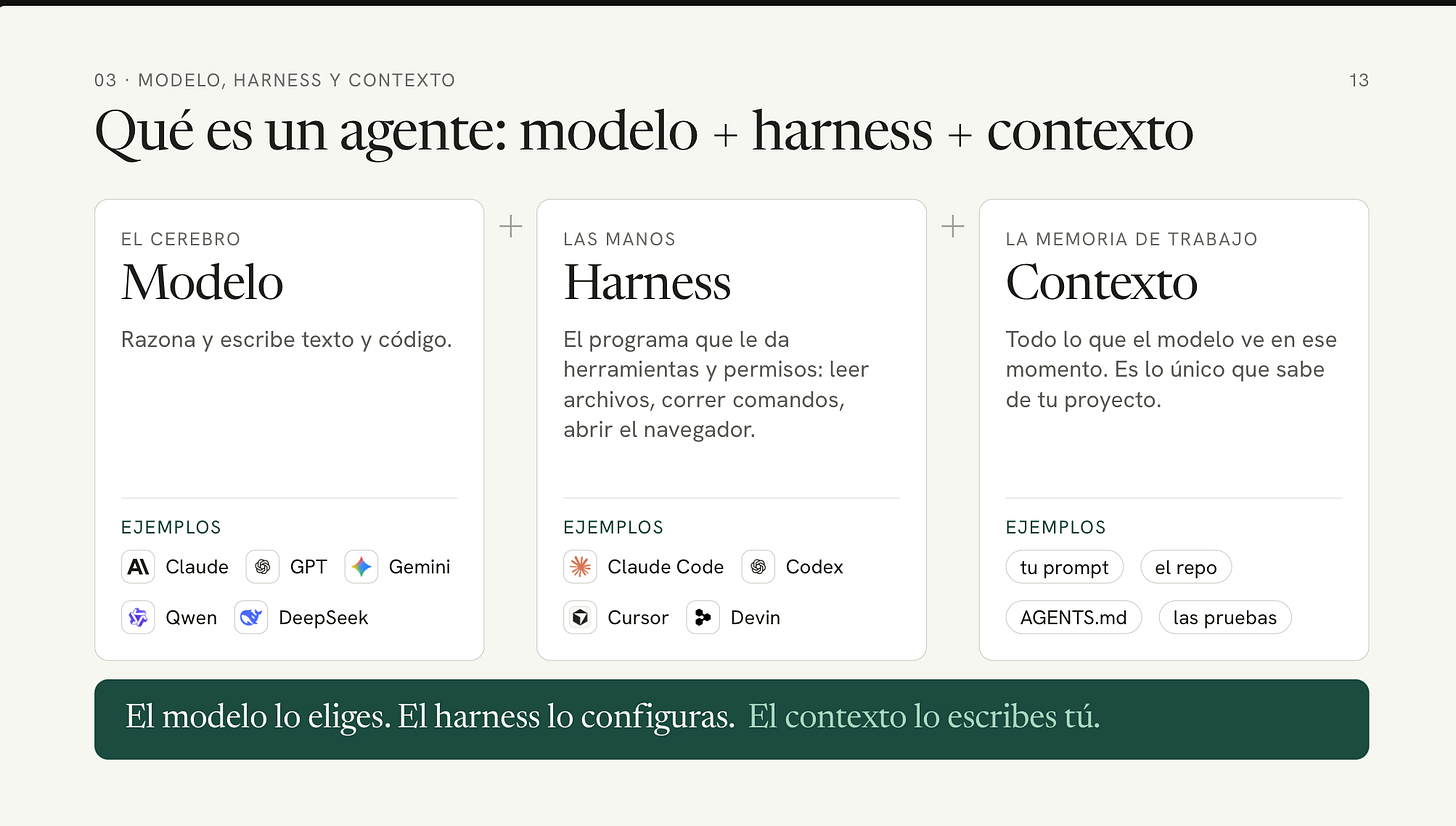
In these products you pick the model, the harness comes included, and they all look more and more alike. Context is the only thing that is still yours, and it is what separates an agent you can delegate to from one you have to babysit.
That is why these tools give you an edge, but with conditions:
- You design better if you have a defined design system.
- You ship more features if you have good rules in your AGENTS.md and a CI/CD pipeline that validates the work.
- You analyze your data better if you have a solid ETL pipeline.
The best way to understand them is to use them
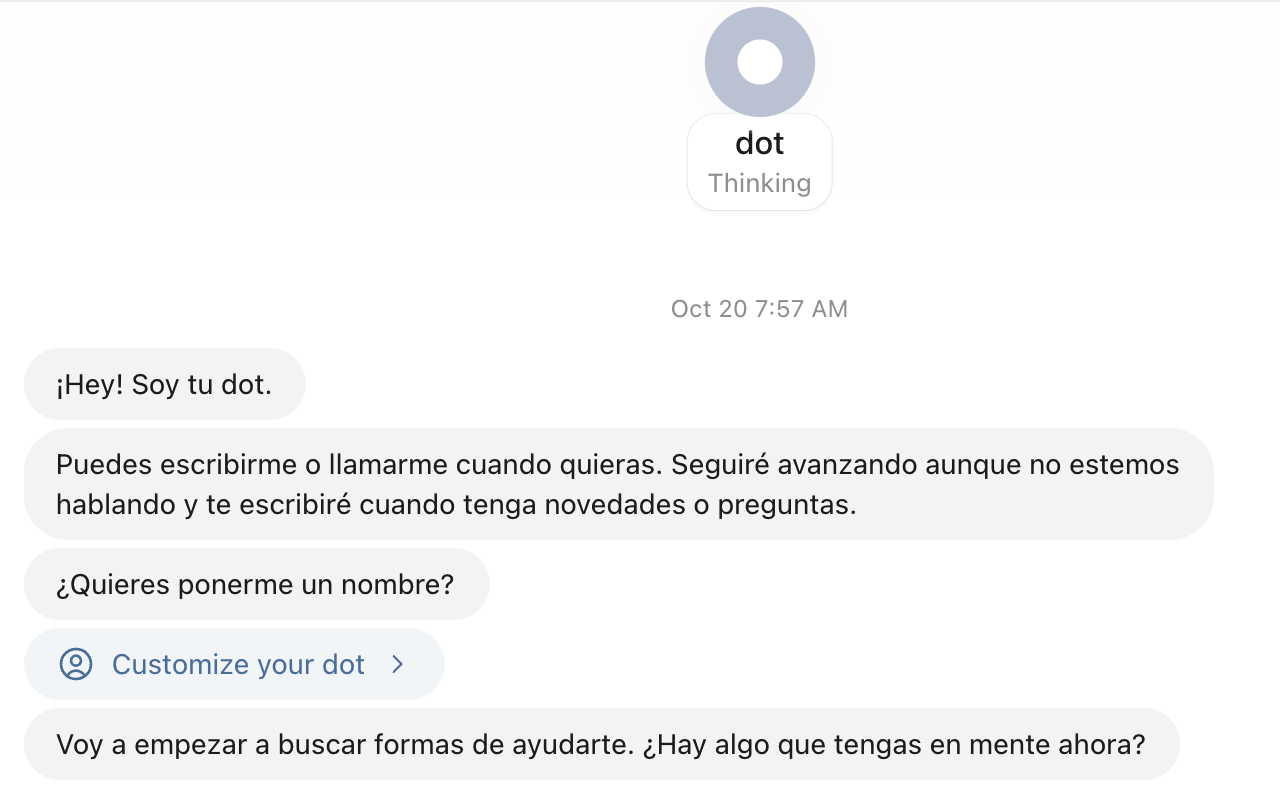
A proactive agent can only help you with what it sees: your repos, your Slack, your email, your conversations, and so on. Without access, it is a chat waiting for instructions.
You will notice two things:
- How different it feels when something writes to you before you ask for anything. You do not get that from reading about agents.
- What it does not know how to do. Every time it gets something wrong or asks you something obvious, it is showing you a part of your company that nobody has written down, or that is ambiguous.